Qualitative research has always had a hard ceiling. There are only so many conversations one researcher can physically have in a week.
Now an agentic moderator can have some of those conversations for you.
Great Question has its own agentic moderator. It runs the whole session, asking your questions, listening, and following up on what the participant actually said. It's a back-and-forth rather than a script being read out.
We've sat through dozens of AI interviewers by now, and most of them were robotic, laborious, and unpleasant to be on the receiving end of. That gave us strong opinions about how ours should feel, long before we started building it.
It holds a natural conversation, catches verbal cues, and keeps things moving without labouring every point.
What caught us off guard in testing was how much people gave it. Every participant knew they were talking to AI. They opened up anyway, candidly and at length, going into far more detail than the questions asked for.
The probing was doing real work too. Several participants stopped mid-answer to tell the moderator that was a good question, and these are professional interviewers. They don't hand that out.
One of them spent the session actively trying to trip it up, on the grounds that she didn't think AI should be moderating anything. It kept asking sharp questions and got rich answers out of her anyway.
The moderator is intentionally flexible.
Hand the agent a goal and it'll fill in the blanks intelligently. Or write every question yourself and have it ask them exactly as written. Or sit somewhere in between and dial it up step by step.
This is where most AI interviewers fall down. They give you one format, a fixed script, and a handful of controls, so you either accept how the tool wants to run your study or you don't use it at all. Being able to set your own limits, and decide what good looks like for this particular study, is what separates a tool you can trust with real research from one you can't.
Today: interviews, surveys and prototype tests.
Surveys cover open-ended questions with AI follow-ups, single and multiple choice, 1 to 5 rating, and yes/no. Those answers get mapped into the transcript alongside the conversation.
Prototype tests run on any URL, which widens what you can put in front of participants and lets you do it at scale.
Seeing the screen makes the difference there. The moderator follows what someone does rather than only what they say, and probes into on-screen behaviour while it's happening, catching the moment somebody hesitates, backtracks, or goes quiet because they're stuck.
Every session returns to Great Question and behaves like any other recording. Repository, highlights, reels, insights, Ask AI, tagging and clipping all work on these sessions exactly as they do on any other study. Only completed sessions are kept, so if a participant drops off and retakes, they start fresh and Great Question stays the single system of record.
Recruitment, screening, participant management, consent and incentives are unchanged. You run them exactly as you do today.
This experience used to run on an outside vendor, and we'd hit the ceiling of what that moderator could do. It read a script and not much else. It couldn't watch what a participant was doing, and there wasn't much room to push it past its one format.
So rather than keep designing around someone else's limits, we started over and built it from first principles.
Owning it means the recording, the transcript and the data never leave the platform, with no third party sitting between you and your participants' words. It also means the moderator can reach everything else Great Question knows, which a bolted-on tool never can.
We don't think it is, and we'd rather say so.
The pattern we see working is a hybrid one. A researcher moderates the first few interviews personally, listening for what's landing and catching the question that isn't working, then hands that guide to the agent to run at a scale nobody would staff.
Both sets of sessions land in the same study and in the same repository, and they analyse together. No export step, no second tool, and nothing to reconcile between two datasets that were never designed to meet.
Some studies should stay with you. Sensitive topics, complex emotional exploration, executive interviews, anywhere reading the room is the skill and anywhere a participant needs to feel a person on the other end. Researchers should have access to any methodology and any moderator they want, and agentic moderation is one more of each rather than a replacement for the rest.
Stay tuned.
If you want agentic moderation switched on for your account, talk to us or get in touch with your customer success representative.
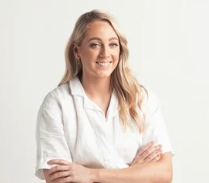


Tania Clarke is a B2B SaaS product marketer focused on using customer research and market insight to shape positioning, messaging, and go-to-market strategy.